Athlete Profile: Michael Phelps
Winning 8 gold medals in a single Olympics, setting world records in all 8 of his races, and becoming the most celebrated Olympic athlete of all time might get people talking.
But who knew all the talk would be of food and calories?
During the 2008 Summer Olympics, the “Olympic diet” of Michael Phelps was played out all over the media and dissected in blogs around the world. And, oddly enough, some people are actually trying it themselves – if only for a single day.
So, what’s the big deal?
Well, based on the reports, Phelps’ daily intake ranges anywhere from 8,000-12,000 calories and consists of:
Breakfast
- three fried egg sandwiches with cheese, lettuce, tomatoes, fried onions, and mayonnaise
- a five-egg omelette
- a bowl of grits (here’s an explanation for non-Southerners)
- three slices of French toast with powdered sugar
- three chocolate chip pancakes
- two cups of coffee
Lunch
- a pound of pasta with tomato sauce
- two large ham, cheese and mayo sandwiches on white bread
- four energy drinks
Dinner
- a pound of pasta with tomato sauce
- six to eight pizza slices
- four energy drinks
While his calorie intake is nearly 2 to 3 times the intake of the average man, Michael Phelps is anything but average. At 192 lbs (87kg) and 6’3” (1.93m ) tall, Phelps’ enormous intake fuels his super-fast metabolism and his super-high volume training.
The guy does up to 7.5 to 8 miles (12-13 km) of swimming each day plus dry-land training for 6 days a week. It’s estimated that he burns nearly 1,000 calories per hour in each training session. So is it such a surprise that he needs to inhale calories almost as fervently as he gobbles up oxygen between swim strokes?
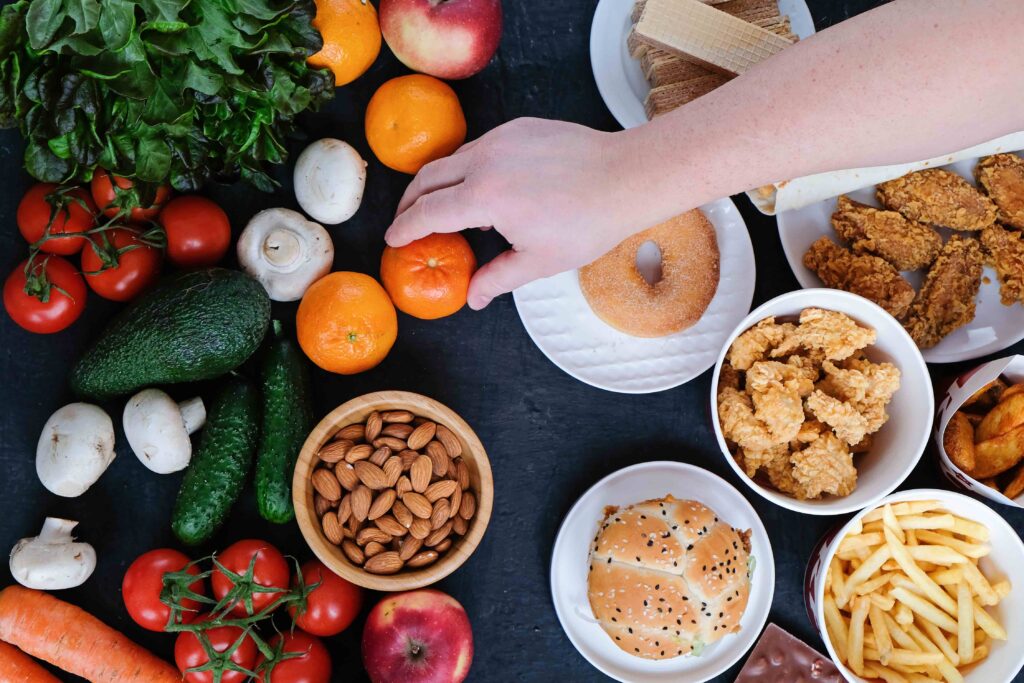
Now, the buzz hasn’t necessarily been about how much he’s eating (though that in itself is notable) -– but what he’s eating. Health food junkies worldwide have screamed out in protest:
“Imagine what he could be doing if he avoided the junk and ate healthy!”
Uh… well… we here at PN have a different take on things. You see, for starters, if Michael Phelps tried to eat all “healthy” food, he’d probably be a worse swimmer –- not a better one!
You see, eating 10,000 calories a day from fruits, veggies, and clean carbs is downright impossible. In essence, these foods aren’t very calorie-dense. They take up a lot of volume in your stomach but don’t provide a lot of calories. And that’s a problem when you’re training for 5-6 hours per day, napping between sessions, and struggling to get all the calories you need in the few short hours between swimming and sleeping.
It just doesn’t happen, folks.
We here at PN realize that approving foods like pizza and fried egg sandwiches on an athlete’s meal plan seems incongruent with what we teach. And it would be surprising advice… if you were a recreational exerciser trying to look and feel better. However, Michael Phelps is anything but a weekend warrior. He’s a high performance machine that needs fuel – and lots of it.
So let’s go easy on Phelps. He’s doing the best he can to fuel Olympic championship performances. And, last time we checked, his mission has been accomplished. 8 races, 8 gold medals, 8 world records. How much better do you think this guy needs to be?
Now, could he do a little better with his diet? Maybe. But not for performance. He’s obviously got that part figured out. Rather, he could sneak in a few more fruits and veggies here and there – or at least a green food supplement. He could also sneak in some healthy fats, fish oils, etc. This could improve his health profile, his inflammation profile, and his immune system. But we don’t really see big problems with his intake; at least not so much that we’d take up arms against his nutritionist.
Phelps’s goal, as with any other athlete, is to meet all his basic nutritional needs: to get enough protein, enough healthy fats, and enough nutrients. Beyond that, he can eat whatever he wants as long as he stays lean, his blood work stays in check, and, most importantly for him, he performs well. I mean, what else is there?
Want another example of this in action? One of our bobsled athletes has an awesome diet. He eats 6 solid, clean meals a day year-round. He gets 8-10 servings of fruits and veggies. He gets all his lean protein. He gets plenty of fibre. He gets all his healthy fats. Health food enthusiasts would be proud.
But let’s drop the bomb: During his off-season, when our athlete is trying to gain muscle mass, he drinks 6 litres (about a gallon and a half) of chocolate milk per day. That’s 1 litre with each meal. Why? Because he needs more calories to grow and these are the calories he chooses. Phelps wants fried egg sandwiches and pizza. This guy wants chocolate milk. 
It’s important to remember that whatever “discretionary” foods an athlete uses, it’s all just food. We don’t label it as good or bad. As long as their nutrient needs are being met, and their blood profile and body composition stays in check, the high level of exercise inherent in their training will minimize any risk factors that might normally occur with excess sugar, fat, and calories in the diet.
And don’t fool yourself: these guys are heavily monitored. Their teams of coaches and physiologists know exactly what’s happening in their bodies. There isn’t any guess work.
Now, if these athletes stop competing they will need different strategies for nutrition -– the same ones you and I employ. They’ll need to adjust their food choices, timing, and amounts or else they’ll end up just like most of the North American population: out of shape, dying of heart disease and diabetes, and pretty much hating their physical bodies.
But for now, it doesn’t look like this is going to be a concern for Phelps. He’s already committed himself to four more years of training in order to compete at the 2012 Olympics in London.
With new goals in sight, it’s likely he will continue to eat the same way, but he may substitute a big bowl of flakes for his morning grits. As part of a deal brokered with Kellogg’s, an official sponsor of the 2008 U.S. Olympic team, Phelps will soon be appearing on boxes of Kellogg’s Frosted Flakes and Corn Flakes.
That’s kind of a shame, since we’d rather have seen him get in on the “5 to 10 a day” campaign.

Couldn’t you just see his face done up in fruits and vegetables?