We all know that what you eat is important. But what about when you eat? Especially if you’re active?
In this article, we’ll review the evidence on workout nutrition and give you practical recommendations for what to eat before, during, and after exercise.
[Bonus: We even created a cool infographic that summarizes this article. Click here for: Workout nutrition illustrated. What to eat before, during, and after exercise.]
Quick summary
By eating a healthy, well-considered meal 1-2 hours before exercise, and another healthy, well-considered meal within 1-2 hours after exercise, most people can meet their workout nutrition needs without anything else.
In other words:
If you’re a healthy person who exercises regularly, you probably don’t need special workout nutrition strategies.
Athletes have special needs
Of course, if you’re…
- An endurance athlete. You train for high-level competition. You log a lot of high intensity miles each week. For you, carbohydrate and calorie needs are likely higher. You could add a protein + carbohydrate (P+C) drink during your training.
- Training as a bodybuilder. You lift weights with serious muscle growth in mind. You want to gain weight. Your protein and calorie needs are likely higher. You could also add a protein + carbohydrate (P+C) drink during your training.
- Getting ready for a fitness competition. You accumulate a lot of exercise hours. You’re trying to drop to a single-digit body fat percentage. For you, carb intake should be lower. You’d benefit from the performance-enhancing, muscle-preserving essential amino acids (EAA) during your training.
Here’s a handy table that outlines our recommendations by goal and by body type (though we’d emphasize goal over body type).
Workout nutrition guidelines by goal and body type
| Body type | General goal | Pre-workout | During workout | Post-workout |
|---|---|---|---|---|
| Ectomorph | Muscle gain or endurance support | Eat normally 1-2h prior | Water, P+C drink, or EAA drink during | Eat normally 1-2h after |
| Mesomorph | Physique optimization or intermittent sport support | Eat normally 1-2h prior | Water, P+C drink, or EAA drink during | Eat normally 1-2h after |
| Endomorph | Fat loss or strength sport support | Eat normally 1-2h prior | Water or EAA drink during | Eat normally 1-2h after |
Most everyone else: Focus on food quality & quantity
Remember:
- if you’re exercising for general health and fitness;
- if your goals are more modest; and/or
- you don’t have unique physiological needs…
…then you probably don’t need any particular workout nutrition strategies.
Focus on:
- eating more minimally processed proteins, veggies, quality carbs and healthy fats;
- ensuring your portions are the right size, and in the right amounts, for you; and
- eating slowly, until satisfied.
For more on these, check out … How to fix a broken diet: 3 ways to get your eating on track.
Save $200 on the industry's top nutrition certification
Help people improve their health and fitness—while making a great full-time or part-time living doing what you love.

Not everyone needs nutrient timing
These days, even women’s magazines like Cosmopolitan recommend exercise drinks to help with hydration and recovery. Nutrient timing, they say, is important for every exerciser.
Well, we hesitate to disagree with the eminent sports nutrition pros staffing lifestyle magazines, but most people don’t need to worry about nutrient timing.
At Precision Nutrition, we’ve worked with over 150,000 clients through our coaching programs. This experience, combined with the latest scientific evidence, suggests that for most people trying to look and feel their best, nutrient timing is not a main priority.
For a full review, check out … Is nutrient timing dead? And does “when” you eat really matter?
Indeed, for a lot of people, stressing out about:
- when to eat their carbs;
- when to eat their fats; and
- what to supplements to take in and around their workouts…
…can be distracting, even self-sabotaging.
(For other people, nutrient timing actually gives them a framework for making good food decisions and controlling total intake. Of course, if that’s you, rock on with the nutrient timing!)
Context matters
Remember, we’re not saying nutrient timing is good or bad here.
It certainly can, and often does, work.
But nutrient timing is just one tool. Like every tool, it has to be used skillfully, in the right way and in the right situation.
What’s true for the pre-diabetic office worker who’s never exercised is certainly not true for the serious endurance runner or the long-time bodybuilder. In fact, as noted earlier, the people who stand to benefit most from specific nutritional strategies around their workouts are athletes.
So, in the end, if you’re reading this as an athlete, or a serious exerciser – or a trainer/coach who works with these populations – know that these strategies could help make a difference.
Nutrient timing isn’t magic
Nutrient timing won’t suddenly transform your physique or performance. This is especially true if you aren’t yet doing the fundamental nutrition habits consistently.
If you’re a recreational exerciser who just wants to look and feel better, nutrient timing might help, but might also be a lot of work for minimal return.
Workout nutrition in detail
For those of you interested in learning more, let’s dig in.
First we’ll cover what’s happening during the pre-exercise, during-exercise, and post-exercise time periods.
Then we’ll share what to eat to get the most out of them.
Pre-exercise nutrition needs
What and when you eat before exercise can make a big difference to your performance and recovery.
In the three hours before your workout, you’ll want to eat something that helps you:
- sustain energy;
- boost performance;
- hydrate;
- preserve muscle mass; and
- speed recovery.
Here are a few ways to ensure you’re meeting your requirements.
Protein before exercise
Eating some protein in the few hours before exercise:
- Can help you maintain or even increase your muscle size. That’s important for anyone who wants to improve health, body composition, or performance.
- Can reduce markers of muscle damage (myoglobin, creatine kinase, and myofibrillar protein degradation). Or at least prevent them from getting worse. (Carbohydrates or a placebo eaten before exercise don’t seem to do the same thing.) The less damage to your muscles, the faster you recover, and the better you adapt to your exercise over the long term.
- Floods your bloodstream with amino acids just when your body needs them most. This boosts your muscle-building capabilities. So not only are you preventing damage, you’re increasing muscle size.
Before you rush off to mix a protein shake: While protein before a workout is a great idea, speed of digestion doesn’t seem to matter much. So any protein source, eaten within a few hours of the workout session, will do the trick.
Carbs before exercise
Eating carbs before exercise:
- Fuels your training and helps with recovery. It’s a popular misconception that you only need carbs if you’re engaging in a long (more than two hour) bout of endurance exercise. In reality, carbs can also enhance shorter term (one hour) high-intensity training. So unless you’re just going for a quiet stroll, ensuring that you have some carbs in your system will improve high intensity performance.
- Preserves muscle and liver glycogen. This tells your brain that you are well fed, and helps increase muscle retention and growth.
- Stimulates the release of insulin. When combined with protein, this improves protein synthesis and prevents protein breakdown. Another reason why a mixed meal is a great idea. No sugary carb drinks required.
Fats before exercise
Fats before exercise:
- Don’t appear to improve nor diminish sport performance. And they don’t seem to fuel performance — that’s what carbs are for.
- Do help to slow digestion, which maintains blood glucose and insulin levels and keeps you on an even keel.
- Provide some vitamins and minerals, and they’re important in everyone’s diet.
Pre-exercise nutrition in practice
With these things in mind, here are some practical recommendations for the pre-exercise period.
Depending on what suits your individual needs, you can simply have normal meal in the few hours before exercise. Or you can have a smaller meal just before your exercise session. (If you’re trying to put on mass, you may even want to do both.)
Option 1: 2-3 hours before exercise
This far in advance of your workout, have a mixed meal and a low-calorie beverage like water.
If you’re a man, here’s what your meal might look like:
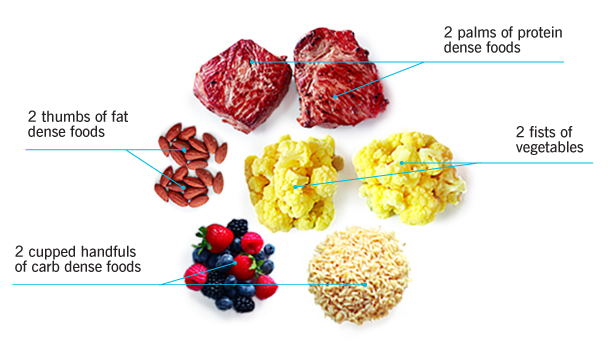
If you’re a woman, here’s what your meal might look like.
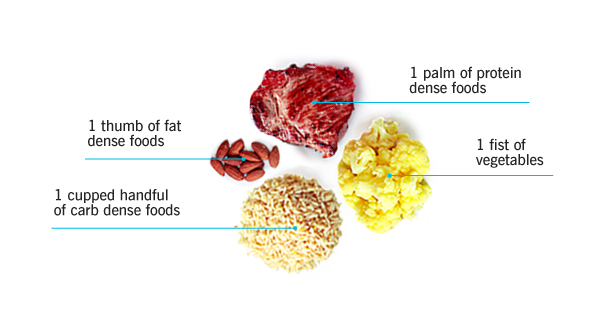
Note: Your actual needs will vary depending on your size, goals, genetics, and the duration and intensity of your activity.
For example, an endurance athlete preparing for a 20 mile run will need more carbs than someone getting ready for a 45 minute gym session.
This article talks more about how you can individualize these meals for your own needs.
Option 2: 0-60 minutes before training
Rather than eating a larger meal 2-3 hours before exercise, some people like to eat a smaller meal closer to the session.
The only issue with that: the closer you get to your workout, the less time there is to digest. That’s why we generally recommend something liquid at this time, like a shake or a smoothie.
Yours might look like this:
- 1 scoop protein powder
- 1 fist of veggies (spinach works great in smoothies)
- 1-2 cupped handfuls of carbs (berries or a banana work great)
- 1 thumb of fats (like flax seeds or avocado)
- low-calorie beverage like water or unsweetened almond milk
Here’s a delicious example:
- 1 scoop chocolate protein powder
- 1 fist spinach
- 1 banana
- 1 thumb peanut butter
- 8 oz. chocolate, unsweetened almond milk
It probably goes without saying, but with pre-training nutrition, choose foods that don’t bother your stomach. Because… er… you know what happens if you don’t.
During-exercise nutrition needs
What you eat or drink during exercise is only important under specific circumstances. But if you are going to eat during exercise, your goals will be similar to those for pre-workout nutrition. Above all, you’ll want to maintain hydration, so for most, water is all you need here.
Goals of nutrition during exercise:
- stay hydrated;
- provide immediate fuel;
- boost performance;
- preserve muscle; and
- improve recovery.
Protein during exercise
Eating protein during exercise:
- Helps prevent muscle breakdown. This can lead to improved recovery and greater adaptation to training over the longer term. And this is especially true if it has been more than three hours since your last meal. You only need a small amount of protein to control protein breakdown — around 15 grams per hour. If you’re the type of person who prefers to exercise on an empty stomach, then 5-15 grams of EAAs during training can be helpful. (15 grams per hour during training, 5 grams per hour during competition.)
- Is really only necessary for some people: athletes doing long, intense training bouts, multiple daily training sessions, and/or more advanced individuals trying to make significant changes to their body composition.
Carbs during exercise
Eating carbs during exercise:
- Provides an immediate fuel source. This helps boost performance and facilitate faster recovery. It keeps our stress hormone cortisol down, and beneficial hormones up.
- Is only beneficial in certain circumstances: endurance athletes on long runs, for people who want to gain a lot of muscle, and for highly active people who need every calorie they can get to increase size, strength, and/or performance.
How many carbs should you eat?
That depends. The maximum amount of carbohydrates that can be digested/absorbed during exercise is 60-80 grams per hour. And these rates are best achieved with a mix of glucose, fructose, and maltodextrin (as they use different transport mechanisms).
However, if you include protein in the mix, you can achieve the same endurance benefits with only 30-45 grams of carbohydrate per hour. Note: the protein also protects against muscle breakdown so it’s typically a good idea to add some in.
Fats during exercise
Eating a bit of fat before and after exercise can be a great idea. (And tasty, too!)
But you should try to avoid eating fats during exercise. That’s because fats can be more difficult to digest. And during training, you don’t want to give your stomach more work than it can handle.
During-exercise nutrition in practice
Do you need to eat during your workout?
That depends on how long it’s been since your last meal and the length/type of exercise you’re planning on.
Exercise lasting less than two hours
For training that’s less than two hours long, the main focus should be hydration. This is especially true if you’re using good pre- and post-training nutrition. So make sure you bring plenty of water.
But what about sports drinks? They don’t offer much benefit for events less than two hours long. Especially if you ate a good pre-exercise meal.
There are some exceptions, though.
- If you’re exercising in the heat and sweating a lot, sports drinks may be useful since they have electrolytes that help speed hydration and recovery.
- Also, if you’re going to be competing or training again in less than eight hours, sports drinks may jumpstart recovery before the next session.
- If you’re trying to gain maximum muscle, then including a protein and carbohydrate drink or some EAAs during training could provide a small advantage.
- Finally, at the highest end of sport or competition, while it may not help, it certainly won’t hurt to sip on a sports drink during competition to ensure maximal hydration and energy supply.
Exercise lasting more than two hours
For training that is longer than two hours, sports drinks can be a huge help. Every hour you’ll want to consume:
- 15 grams protein
- 30-45 grams carbs
This can come in the form of liquids, gels, or even some solid food.
Many endurance athletes prefer to drink water and eat fruit and other foods to supply their energy even on really long runs. Either approach is fine, as long as you ensure you’re getting enough protein, carbohydrates and electrolytes, especially sodium.
And if you are competing for longer than two hours, you’ll likely want to lower the protein and up the carbs, so every hour you’ll want to consume:
- 5 grams protein
- 45-60 grams carbs
More protein during training to emphasize recovery, and less protein during competition to emphasize performance.
If you are exercising intensely for longer than two hours, especially in the heat, do not rely on water alone. This will decrease your performance and your recovery. And it could also lead to hyponatremia, a condition in which the sodium levels in your blood become too low. Hyponatremia causes your muscles and heart to contract erratically, and can even lead to death.
Under these conditions, when you’re sweating a lot, go with sports drinks.
Post-exercise nutrition needs
Now let’s take a look at post-exercise nutrition.
Post-workout nutrition can help you:
- recover;
- rehydrate;
- refuel;
- build muscle; and
- improve future performance.
Protein after exercise
Eating protein after exercise prevents protein breakdown and stimulates synthesis, leading to increased or maintained muscle tissue. So it’s a great strategy for better recovery, adaptation, and performance.
In the past, most fitness experts recommended fast acting proteins like whey or casein hydrolysate. This is because early research indicated that the more quickly amino acids get to your muscles, the better the result.
However, new research shows that hydrolyzed, fast-digesting proteins may get into our systems too fast. Because they’re in and out of the bloodstream so quickly, they might not maximize protein synthesis or maximally inhibit protein breakdown after all.
What’s more, hydrolyzed casein is preferentially taken up by the splanchnic bed (i.e. our internal organs). Which means it isn’t maximally effective for improving protein synthesis elsewhere.
And the protein you ate before training is still peaking in your bloodstream, so how quickly this protein gets there doesn’t really matter.
In other words, there’s no real evidence that protein powders, especially the fast-digesting kind, are any better for us than whole food protein after training.
They’re probably not worse either. Which means you can choose whichever type of protein you want for your post-workout meal.
Want fast and convenient? Make an awesome post-workout Super Shake.
Want real food? Then make an awesome high-protein meal.
Any high quality complete protein should do the job, as long as you eat enough. That means about 40-60 grams for men (or 2 palms) and 20-30 grams for women (1 palm).
Carbs after exercise
Contrary to popular belief, it’s unnecessary to stuff yourself with refined carbohydrates and sugars to “spike” insulin and theoretically restore muscle and liver glycogen as rapidly as possible after your workout.
In fact, a blend of minimally processed whole food carbohydrates, along with some fruit (to better restore or maintain liver glycogen) is actually a better choice, because:
- it’s better tolerated;
- it restores glycogen equally over a 24-hour time period; and
- it might lead to better next-day performance.
Endurance athletes who perform two glycogen-depleting sessions within eight hours of one another might be an exception to this guideline, as speed of glycogen replenishment is critical in that situation. But for most healthy exercisers, whole food with some fruit is likely a better way to go.
Research shows that muscle protein breakdown is most inhibited and muscle protein synthesis happens best when insulin is at 15-30 mU/L. This is only about three times above fasting levels of 5-10 mU/L.
These levels are easily reached if you eat a mixed meal or drink Super Shake a few hours before and after training. Plus, with mixed meals, your levels should stay at this rate for about four hours after consumption.
Fats after exercise
Dogma has it that we should avoid fats after exercise because they slow the digestion and absorption of nutrients.
While this is true, in most cases, it’s also irrelevant. We’ve already seen that speed of digestion of protein and carbs is not necessarily as important as we once thought. The same with fats.
In fact, one study compared what happens when people drink skim milk rather than whole milk after training. Participants drank either 14 oz. of skim milk or 8 oz. of whole milk (that equalized the calories, for those of you who love calorie math).
The skim milk drinkers got the same number of calories — along with six extra grams of protein. So you’d think they’d have the advantage.
Yet the whole milk drinkers actually ended up with a higher net protein balance! And the researchers had no explanation other than the fat content of the whole milk.
Additional research shows that eating as much as 55 grams of fat post-training, and another 55 grams in the two subsequent meals did not get in the way of glycogen replenishment compared to lower fat meals with the same amount of carbohydrates.
Clearly, fat doesn’t reduce the benefits of protein and carbohydrate consumption around training. In fact, it actually might provide some benefits of its own!
Post-exercise nutrition in practice
While you don’t have to rush in the door and straight to the fridge the minute you finish at the gym, you shouldn’t dawdle and poke around forever before eating. Failing to eat within a two-hour window following training can slow recovery.
But this is context dependent; what you ate before your workout influences things.
If your pre-training meal was a small one or you ate it several hours before training, then it’s probably more important for you to get that post-workout meal into your system pretty quickly. Probably within an hour.
If you trained in a fasted state (say, first thing in the morning before breakfast) then it’s also a good idea to chow down as soon after your workout as you can.
But if you ate a normal-sized mixed meal a couple of hours before training (or a small shake closer to training), then you have a full one to two hours after training to eat your post-workout meal and still maximize the benefits of workout nutrition.
So go ahead — spend an hour in the kitchen cooking up a feast.
0-2 hours after exercise
The approach to recover from training is the same as your preparation for a workout: have a mixed meal of real food.
Again, here’s how men might build it:
- 2 palms of protein;
- 2 fists of vegetables;
- 2 cupped handfuls of carbs;
- 2 thumbs of fats;
- low-calorie beverage like water.
And here’s how women might build it:
- 1 palm of protein;
- 1 fist of vegetables;
- 1 cupped handful of carbs;
- 1 thumb of fats;
- low-calorie beverage like water.
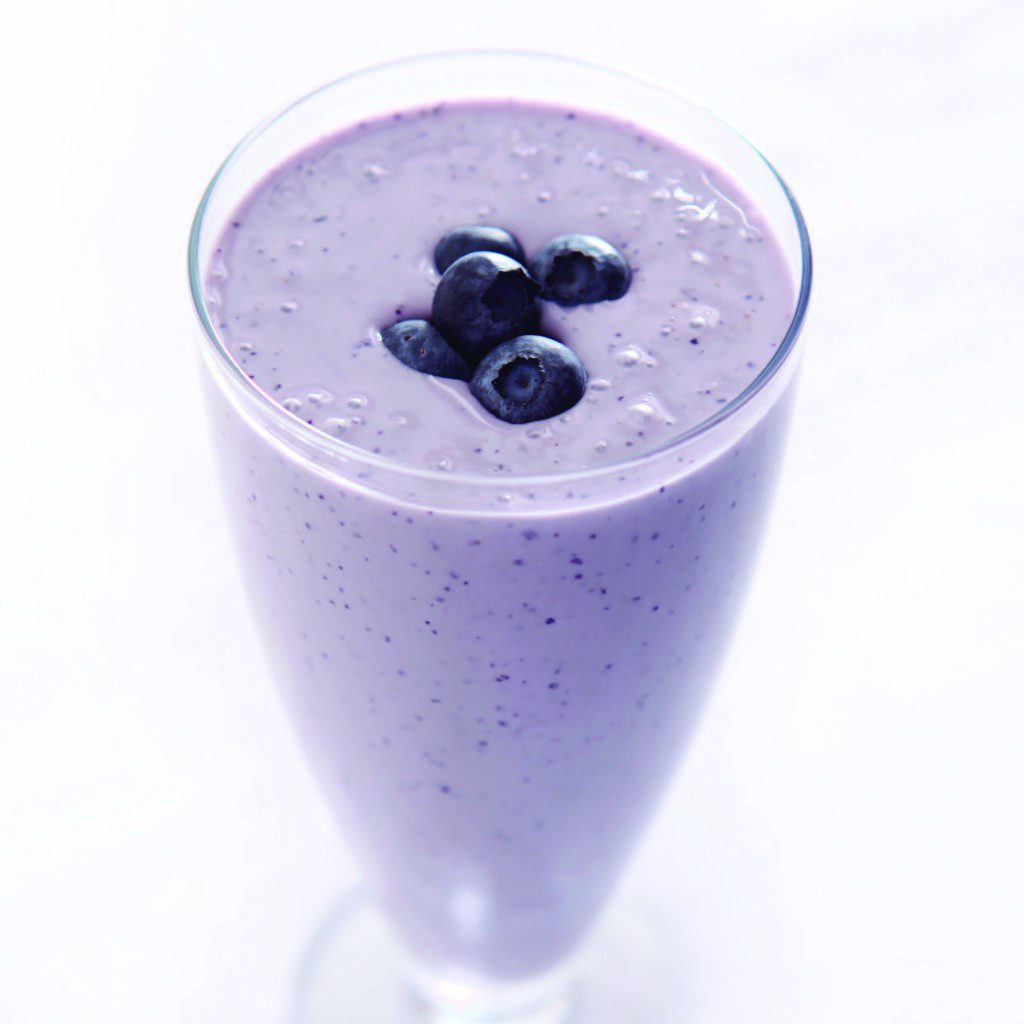
Sometimes after training you might not feel hungry. And that’s okay. If you don’t feel like eating, you can go with liquid nutrition.
Make a Super Shake using the same hand-sized portion guidelines as discussed above.
Conclusion
In the end, there’s no perfect pre-and-post-training feeding regimen for everyone.
What to eat is always context specific.
The protein, carbohydrate, fat, and fluid requirements for a 155 lb. endurance athlete in the midst of marathon training vs. a 225 lb. bodybuilder recovering from a heavy resistance-training session are quite different.
Times of your training year will also dictate different needs in the post-exercise recovery period. That same bodybuilder will need a different approach when he starts to diet in preparation for a contest.
For most of us, people without athletic competitions on the horizon, the best pre- and post-training meals will contain some combination of high quality protein, high quality carbohydrates, healthy fats, and some fruits and vegetables.
These whole foods provide an awesome blend of nutrients: protein, carbohydrates, fats, fiber, vitamins, minerals, antioxidants, and phytonutrients that build muscle, supply energy, decrease inflammation, and boost recovery.
Of course, you can eat solid foods or drink smoothies. And the amount of each macronutrient can vary depending on your needs as well as personal preferences and tolerances.
In terms of timing, you have about one to two hours on both sides of your training to still get maximal benefit.
And, according to the most recent data, the total amount of protein and carbohydrate consumed over the course of the day is far more important to lean mass gain, fat loss, and performance improvements than any specific nutrient timing strategy.
So enjoy your workout. And your meals.
References
Click here to view the information sources referenced in this article.
If you’re a coach, or you want to be…
You can help people build sustainable nutrition and lifestyle habits that will significantly improve their physical and mental health—while you make a great living doing what you love. We'll show you how.
If you’d like to learn more, consider the PN Level 1 Nutrition Coaching Certification. (You can enroll now at a big discount.)
Share