What does healthy nutrition for kids look like? In this article we discuss how childhood shapes brain development, metabolism, and overall health. And how to give our children a great start.
++
Eating patterns built during childhood serve as a foundation for life. What we eat early on shapes brain development, metabolism, and overall health.
And right now, the top three sources of calories for 2-3 year olds in the US are:
- milk
- fruit juice
- pasta.
Hmmm. That’s kind of a weak foundation.
But there’s good news. You may only need to make a few small changes to improve your child’s nutritional profile and ensure a lifetime of healthy – and pleasurable – eating.
After all, nutrition affects all aspects of childhood growth, development, and health.
This includes:
- maintaining a healthy weight;
- avoiding health problems related to excess body fat;
- gut health; and
- brain development and behavior.
Let’s explore these factors a bit more.
Factor #1: Excess weight
In 1980, only 7% of American kids aged 6-11 were obese.
In 2010, it was 18% — nearly one in five.
Now, about one-third (33%) of U.S. kids are classified as overweight or obese.
Why is this a problem?
Health problems and overweight
Carrying excess body fat isn’t healthy, and it sets the stage for both childhood and adult diseases.
For example:
- 70% of obese teens are already showing signs of cardiovascular disease — a health problem that normally doesn’t appear until decades later.
- Adipose tissue (fat) secretes hormones and chemical signals; too much fat means inflammation. In kids, this means things like asthma.
- Fat can accumulate in the liver; non-alcoholic fatty liver disease (NAFLD) is the leading cause of liver disease in kids worldwide. Children with fatty livers face double the risk of arterial plaque buildup.
- Over-fat children have impaired insulin sensitivity, glucose disposal, and prediabetes.
- Over-fat children have higher long-term risk of chronic conditions such as stroke; breast, colon, and kidney cancers; musculoskeletal disorders; and gall bladder disease.
- Normal growth and hormonal development can be disrupted. This can affect how they develop during puberty, and their future reproductive health. Girls might hit puberty way too early; boys may experience gynecomastia (breast development).
Once a body is overweight at a critical developmental period, it’s very hard to change. Health and physical activity habits established in early life will have effects for decades to come.
Social issues and excess weight
Extra body fat is a psychosocial burden too. It’s no fun to be the fat kid in the playground. Overweight and obese kids and teens face teasing and social exclusion.
The role of nutrition in overweight
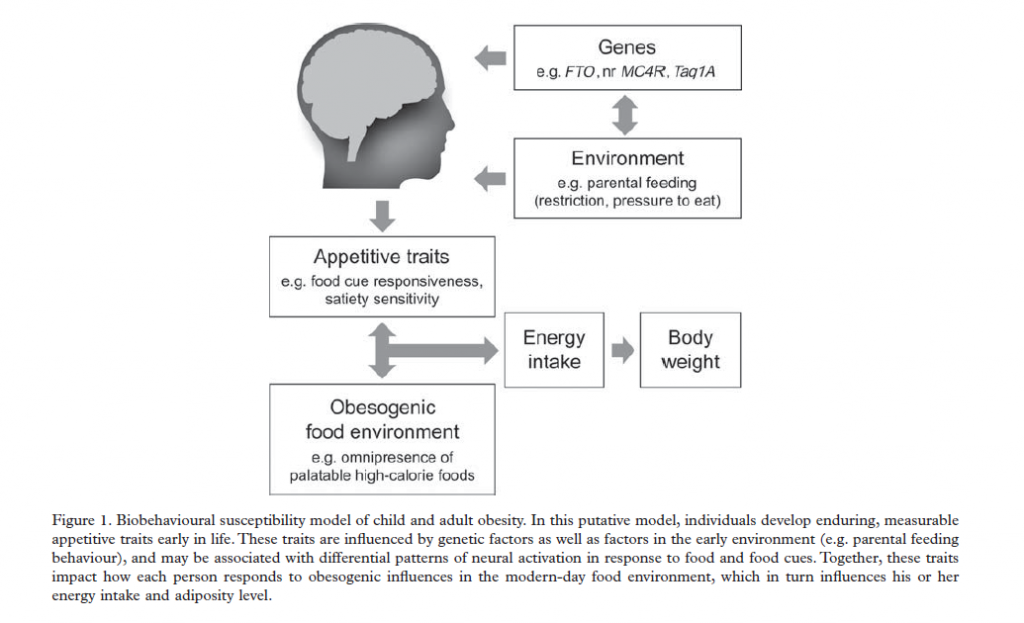
Which children are most at risk of being overweight or obese? Those who consume mostly calorie dense foods. (See All About Energy Balance)
As the chart below shows, children’s health and weight results from a combination of factors — most of which we can control.
Factor #2: Gut health
Just like grownups, kids depend on good digestion. But because they’re young and vulnerable, they’re often prone to catching viruses and bacterial infections. The result is sometimes diarrhea, which often signals an intestinal infection.
But not all diarrhea results from illness. A major preventable cause is fruit juice. Juice contains fructose and sorbitol, which contribute to diarrhea in high amounts.
If diarrhea is common, its opposite, constipation is more rare – providing kids eat enough whole plant foods. But regardless of diet, when a child needs to go and tries to “hold it,” this can cause problems.
Kids who struggle with constipation before the age of five tend to continue struggling with it after puberty.
Side note: If you are a student/researcher in pediatrics, there aren’t many high quality studies on childhood constipation, so feel free to organize some studies.
In the end, poor dietary quality is linked to gastrointestinal disorders.
And just as with adults, the bacterial balance in children’s guts can influence their immune function.
That’s why probiotics could help to improve gut health, resolve diarrhea after antibiotic use, and control inflammation. Even in children. Indeed, a host of child-friendly probiotics are now available.
Factor #3: Brain and behavior
Developing brains need quality nutrients. Poor nutrition (whether linked to excess body fat or not) also contributes to child mood and behavioral problems, such as depression and ADHD, even aggressiveness and violence.
This also includes caffeine. One study found that 8-12 year old children consumed an average of 109 mg of caffeine — the equivalent of a cup of coffee a day. Since one cola contains around 30-35 mg caffeine, that means the average kid drinks about 3 colas a day.
Important note on socioeconomic status
Poor childhood nutrition is a complex social problem. It’s tied to geography and economics.
For instance, in industrialized countries like the US or the UK, the kids eating low-quality, energy-dense foods are more likely to be poor, because these foods are cheaper and easily available.
Conversely, in developing countries where poor kids still eat traditional diets and local agricultural staples, it’s the rich kids whose families are able to afford the “luxury” of energy-dense foods.
This means that in industrialized countries at least, poor childhood nutrition is often linked to poverty.
How can you help improve your kids’ nutrition?
The problem of childhood nutrition can seem overwhelming, especially if you’re a parent trying to make healthier choices for yourself and your family. Where to begin?
Start with some simple basics.
- Choose whole, minimally processed foods. Avoid processed foods that are specifically marketed to kids.
- Incorporate vegetables and fruits into kids’ daily diet.
- Supplement with vitamins and minerals if needed, but try to get nutrients from a varied, whole-foods diet first.
- Help kids regulate their appetite and hunger cues with whole foods and mindful eating.
- Take the lead. You’re the parent.
- Adopt healthy habits yourself, so that kids have a role model for their own behavior.
Let’s explore these strategies a bit more.
Strategy #1: Choose whole, minimally processed foods
Kids are a prime target for processed food marketing. Unfortunately, these foods are usually full of junk.
Cut the sugar
Many parents and teachers can tell when kids have eaten sugar; the former little angels are suddenly screaming, tantrum-throwing, wall-climbing demons.
Added sugar also disrupts kids’ natural appetite regulation and contributes to excess body fat, cardiovascular disease, and insulin resistance.
“But Ryan, my kids don’t eat sugary desserts and almost never drink soda, so they’re fine.”
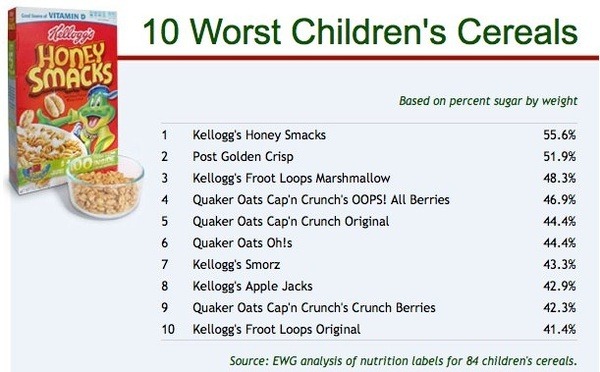
Great! Just keep in mind that ounce for ounce, many breakfast cereals contain more sugar than soft drinks. Same goes for “kid-friendly” brands like Go-Gurt. Sometimes even frozen fruits will contain lots of excess sugars.
(For more on hidden sugar sources, see here).
Read labels
Whether it’s yogurt or fruit juice, granola bars or trail mix, whether it’s labeled “healthy” or has a leprechaun on the package, read the label.
Look for hidden sugars and other unwanted ingredients. You’ll be surprised at what you find when you pay closer attention.
Get the right stuff
The good news is that kids who eat a varied diet of mostly whole foods will get enough healthy carbohydrates, lean protein, and good fats. Speaking of good fats…
Dietary fats
Dietary fats help kids absorb vitamins. They also help them feel full and satisfied after meals. And they’re necessary to manufacture hormones.
Kids need healthy dietary fats in the diet — without these fats, kids develop deficiencies, which can lead to growth, eye, body composition, blood lipid, and brain problems.
Dietary fat is even more critical for kids than it is for adults, since they use a higher percentage of fat relative to their calorie intake.
One type of dietary fat – omega-3 fat – is even useful for cognitive development and the prevention of many chronic diseases.
- EPA/DHA (one type of omega-3 fat) can come from oily fish, but since most kids aren’t exactly keen on that, try sneaking a spoonful of fish oil into a fruit smoothie or supplementing with Barleans Omega Swirl.
- Alpha-linolenic acid (ALA), another type of omega-3 fat, can come from nuts and seeds such as flax, walnuts, pumpkin seeds, or chia. So make raw nuts available as snacks, and try blending up ground flax or chia seed into kids’ cereal or smoothies.
If kids can tolerate eggs (some are allergic), be sure to use whole eggs, as the yolk provides important fat and choline, another essential nutrient for brain development.
Opt for full-fat dairy where possible.
And coconut is a great source of healthy saturated fats. Smash open a fresh coconut together — kids usually think this is hilarious. Or use coconut milk or unsweetened coconut flakes in dishes, and coconut flour in baking.
Small substitutions can add up
Simply switching to less processed, more whole-food versions of things can make a huge difference.
Look at your kids’ daily menu and see where you can make healthier substitutions for processed foods.
A classic parent trick: diluting fruit juice with water; mixing flavoured yogurt with plain yogurt; or cutting chocolate milk with regular milk.
Strategy #2: Incorporate fruits and vegetables
Adding fruits and vegetables is another great and simple way to start improving your kids’ nutrition.
Fruits and veggies come in their own handy packages, are easy to prepare, and full of important nutrients that growing bodies need.
Of course, not all children will love all fruits and veggies right away. Here are some tips to address common problems.
Problem: Kids don’t like the taste of vegetables.
Solution: Prepare vegetables differently. Try roasting, making into a soup, sneaking veggies into a shake with fruit, or serving them raw. And remember, it might require ten or more exposures before a child embraces a new food. So give it time. Keep trying new options. And keep looking for ways to incorporate veggies into meals.
Problem: Preparation seems inconvenient or difficult.
Solution: Keep prepared vegetables such as pre-washed baby veggies handy. Involve children in vegetable and fruit prep — even young children can do things like snap the ends off green beans, mash avocados, or tear up lettuce for salad. The more involved children are, the more likely they are to try new foods.
Problem: No access
Solution: Keep vegetables at home and at school. Rearrange the fridge to make prepared vegetables accessible and less healthy alternatives harder to reach.
Problem: Fruits and vegetables aren’t cool because they don’t have their own commercial.
Solution: Don’t rely on advertising to make food choices. Teach kids to be media-savvy. Help them understand that advertising is designed to sell stuff – not necessarily with their well-being in mind. And take them shopping with you. Let them explore the produce section and choose some things they’d like to try.
Problem: Peer pressure to eat non-nutritious foods
Solution: What happens around peers stays around peers. Focus on eating better at home.
Problem: Parents aren’t eating veggies.
Solution: Parents eat veggies. You knew we were going to say that, right?
Note, also, that raw veggies can be risky for young kids as they can pose a choking risk. (Then again, so do hard candies, nuts, nut butters, hot dogs, and popcorn.)
Strategy #3: Vitamins and minerals
News flash: Nutrient-poor foods consumed in place of nutrient-rich foods can lead to nutrient deficiencies.
If a child isn’t getting enough nutrients from his diet, supplementing with vitamins, minerals, and omega-3 fatty acids might be useful for cognition and behavioral health. Kids of low socioeconomic status, kids with symptoms of ADHD, and kids with learning disabilities might also benefit from supplementation.
The following are nutrients most often lacking in children’s diets, along with some good whole-food sources of those nutrients:
- Calcium – beans, greens, nuts, seeds
- Iron – beans, meat, whole grains, greens
- Zinc – beans, meat, whole grains, fish
- Vitamin A – fruits, vegetables
- Vitamin C – fruits, vegetables (vitamin C promotes iron absorption)
- Folic acid – whole grains, beans, fruits, vegetables
- Vitamin B6 – whole grains, beans, fruits, vegetables, meats
- Vitamin D – fish, eggs, dairy, mushrooms, and fortified foods
- Vitamin B12 – animal foods (children eating a vegan diet will need a vitamin B12 supplement)
- Iodine – iodized salt, sea vegetables, dairy, fish. (Why dairy? Disinfectants used in dairy operations leave traces of iodine in dairy products).
Send the kids out to play in the sunshine as often as possible to help them get enough vitamin D, which is crucial for growing muscle and bone development. Right now, most kids don’t get more than 300 IU of vitamin D a day, which is much less than the dietary intake goal of 600 IU/day. For more on vitamin D, see All About Vitamin D.
Hydration
Water and unsweetened teas are the best thirst-quenchers around. They promote good hydration. And when children get used to the flavor, will prefer these to sugary drinks.
Unfortunately, as things stand, more than 30% of the fructose young children consume comes from sugar-sweetened drinks.
And while cow’s milk is a staple of most kids’ diets, it isn’t mandatory. Using cow’s milk as a “meal replacement” can result in anemia.
Consider eliminating fruit juices in favor of whole fruit and trying some alternatives to cow’s milk. Then using primarily water and unsweetened tea for your children’s beverages.
Food sensitivities in kids
If your child is sensitive to a particular food and needs to eliminate it, that’s okay. Just establish what nutrients the food would provide and include other foods that will make up for it (or use a supplement).
For more about food sensitivities, see All About Food Sensitivities.
If you think your child has a true allergy, do get him or her tested. Allergies can be measured. Up to 5% of kids experience cow’s milk protein allergy. If a child has an allergy to cow’s milk, use a non-allergenic beverage in its place.
Foods that commonly cause sensitivities:
- eggs
- cow’s milk
- soy
- wheat
- peanuts
- tree nuts
- shellfish
Kids and toxins
We’re all exposed to various toxins. And we are always learning more about where toxins can be found. To lower toxin load in children, the following seem to be useful:
- Avoid BPA. BPA is linked to more body fat and health problems in kids. (For more see All About Endocrine Disruptors.)
- Avoid feeding large predatory fish to kids. They tend to contain higher amounts of toxins. (For more see All About Eating Seafood.)
- Try to eat organic. Organic foods tend to contain fewer toxins. (For more see All About Organic Foods.)
- Check body care products. Even common lotions, shampoos, and toothpastes can expose your child to unnecessary risk. (For more see All About Safe Cosmetics)
Strategy #4: Help kids eat the right amount
Given the right conditions, kids tend to be intuitive eaters. Their body cues tell them how much they need.
Some days they’ll eat more, some days less. Their bodies will naturally regulate their intake over the long term. So trying to count calories for otherwise healthy kids is wasted effort.
Kids’ amazing abilities to self-regulate can be messed up by things like:
- inappropriate portion sizing
- processed foods
- restricting foods
- labeling some foods as “bad”
- eating while rushed, distracted, or on the go
Strategies that DON’T work
As a parent, you’ll undoubtedly want to make sure your kids are happy and healthy. So you might:
- offer them food as a reward when they’re upset;
- have strict rules about “good” and “bad” foods;
- push them to finish dinner;
- try bribing them (“If you finish your spinach you’ll get ice cream”).
Unfortunately, the strategies above only make things worse. Plus, it’s a lot of work for you!
Try these strategies instead
So try these strategies instead. To ensure that kids keep eating intuitively and naturally for life:
- Serve them a variety of unprocessed whole foods.
- Serve appropriate portions.
- Give them the illusion of choice and self-determination (e.g. “You can pick 1 vegetable you’d like to eat tonight”).
- Let kids stop when they’re no longer hungry (instead of insisting that they clear their plate).
- Avoid strict “eating rules” or references to children’s weight.
- Don’t keep unhealthy choices in the house. Make healthy choices abundantly available. Don’t make this a big deal; just make poor choices simply and quietly… unavailable.
- Involve kids in shopping, menu planning, and cooking.
- Slow down.
- Eat together as a family as often as possible; make meal time family time.
Strategy #5: Take the lead
Parents: It’s up to you to take the lead. You’re in charge here.
It’s your job to provide the food. But it’s the child’s choice whether to eat it. When kids are hungry, they’ll eat.
Set a good example of healthy eating yourself.
Ultimately, children pay more attention to what their parents do than what their parents say. So set a great example, and chances are, your children will follow where you lead.
But what about picky kids?
This is all very well, you might be saying. But my kid won’t eat vegetables, no matter what! How will he get enough nutrients?
No problem. Make sure he eats plenty of:
- apricots
- cantaloupe
- mango
- peaches and plums
- beans
- nuts
- avocado
- eggs
- citrus
- berries
What about kids who don’t like or can’t tolerate dairy foods? How can they get enough calcium?
Make sure they eat plenty of:
- broccoli
- green leafy veggies (sneak ’em into a fruit smoothie if you must)
- beans/legumes
- fish with bones
- calcium-fortified non-dairy milks
And what about those who don’t like meat? How can they get enough protein?
Make sure they eat plenty of:
- beans
- peas (kids often love steamed edamame in the pod)
- nuts
- seeds
In other words, there’s a solution for just about every potential problem.
General guidelines
While it might seem easiest to focus on daily servings and numbers, it’s smarter to allow for flexibility. Step back and consider the big picture. A few days without 3-5 servings of vegetables is okay.
In general, aim for the following:
- Vegetables – 3-5 servings/day (serving size = fist)
- Fruit – 2-3 servings/day (serving size = fist)
- Beans/legumes/meat/eggs – 2-3 servings/day (serving size = palm)
- Whole grains – 2-3 servings/day (serving size = fist)
- Nuts/seeds/olives/avocado/coconut – 2-3 servings/day (serving size = thumb).
Summary & recommendations
How much should kids eat? They should eat until they are no longer hungry.
What should kids eat? A mix of mostly whole, minimally processed foods.
What should kids drink? Mostly water and unsweetened teas.
How to ensure healthy bowel movements? Adequate fluid, physical activity, and whole plant foods (vegetables, fruits, beans, whole grains, nuts, seeds).
The #1 thing you can do to help your kids? Adopt healthy habits yourself.
Eat, move, and live… better.©
Yep, we know… the health and fitness world can sometimes be a confusing place. But it doesn’t have to be.
Let us help you make sense of it all with this free special report.
In it you’ll learn the best eating, exercise, and lifestyle strategies – unique and personal – for you.
Click here to download the special report, for free.
References
Click here to view the information sources referenced in this article.



Share