Research Review: Portion size does matter
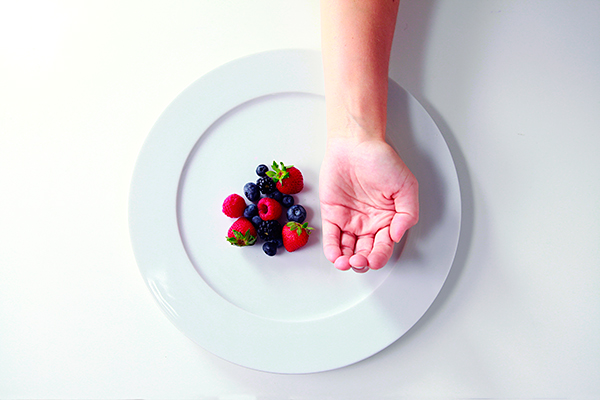
If you’re given more food than normal, would you notice? And would you eat the same amount you normally eat… or would you eat more? Researchers show that you might end up doing a Garfield and devouring a tray of lasagne without realizing…
Growing up, most of us were told to eat everything on our plate. It’s not a bad thing if you’re avoiding your broccoli, but it is a problem when portion sizes, especially at restaurants, keep getting bigger.
In the US between 1977 and 1996, all portion sizes inside and outside the home increased, with the odd exception of pizza (1).
For example, soft drinks went up from 387 mL to 588 mL. That’s 49 calories more per serving. Might not seem like a big deal, but that’s just one change in one food. (Or, I should say, “food”.) If you consume that bigger item every day along with other bigger items, it can really add up.
By the way, obesity increased from 14.5% in 1971 to 30.9% in 1999 in the US (2). Hmm… could it be that portion size is part of the problem?

Super sizing
In 2004, a documentary called SuperSize Me was released. I’m sure most of you have watched it and if you haven’t, you should — both for the entertainment and the educational value.
The film follows Morgan Spurlock (the writer, producer and guinea pig for the movie) over a month. Spurlock imposes two rules on himself for that month:
- He must eat every meal (3 meals/day) at McDonalds.
- If asked if he wants his meal “supersized’, he has to say yes.
So what is “supersized”?
Many North American fast food restaurants now offer “supersizing”: a larger size or quantity for an additional cost. It’s a way to increase how much customers spend while increasing their perception of getting value for their money. After all, we all like to feel we’re getting more for less, right?
For very little money (less than 50 cents) you can get a much larger soft drink and a larger serving of French fries at most McDonalds. The much larger drink is 1.24 L (42 oz) of pop and nearly 200 g (7 oz) of French fries). A great deal!
The problem is, of course, that more food means more calories — a total of 410 calories for the soda pop and 610 calories for the fries. That’s over 1000 calories in one sitting… before you even get to the burger!
Over 1000 calories of food with virtually no nutritional value… besides calories.
Is anyone surprised that this practice of increased serving size has lead to increased levels of obesity? More food, more calories and less exercise equals weight gain.
But, you protest, if you are given more food you don’t have to eat it. Now you are an adult and hopefully your parents aren’t still watching over you at dinner to eat everything on your plate or fast food tray.
Research question
But what if I told you that you may not realize when you’re full? Would you believe me?
It’s a pretty basic concept, something you figured out when you were a baby. Back then, you knew when you were full and it was time to spit out the last spoonful of strained peas or play Frisbee with your bowl of cereal. When you were less than 2 years old you knew you were full.
How about now?
If I gave you more food would you:
a) notice; and/or
b) eat the same amount as you would normally… or would you eat more?
In this week’s study researchers wanted to answer 2 questions:
- How much more calories will people eat if you increase portion size?
- Will people realize that portions have increased and consequently how much they’ve eaten?
Diliberti N, Bordi PL, Conklin MT, Roe LS, Rolls BJ. Increased portion size leads to increased energy intake in a restaurant meal. Obes Res. 2004 Mar;12(3):562-8.
Methods
A public university cafeteria served different portion sizes of baked pasta (I’m guessing lasagne), which was a part of the regular menu rotation.
Over 5 months, on 10 separate days, the researchers secretly recorded who purchased a baked pasta at lunch and how much they ate. Half the days (5 of the 10 days) the pasta was the standard portion. The other 5 days the pasta was 150% of the standard portion.
If you were a regular baked pasta eater at the cafeteria, you would have eaten a regular portioned pasta dish and a “super sized” pasta dish at least once over the 5 month period. After each pasta meal you would’ve completed a survey on who you were (male or female, age, position at the university and four questions about the meal you just ate). Meanwhile, researchers would have covertly watched you and estimated your body size and weighed the food you left behind.
Hmm, seems a bit creepy, but since the diners were regulars the researchers couldn’t come out and say what they were doing — otherwise, if diners knew there was a study going on, they might change their eating habits.
The size and calories of the standard pasta and the supersized pasta were:
| Size | Calories | |
|---|---|---|
| Standard portion | 248 | 399 |
| Supersized portion | 377 | 571 |
| Difference | 129 | 172 |
Each pasta dinner was accompanied with a tomato, butter and a bun – these were exactly the same. The pasta portions changed but the sides didn’t.
Results
Have more, eat more
Given 50% more pasta in the supersized dish, the diners ate 43% more pasta calories (172 calories) than diners who had the regular portioned pasta.
What was even more interesting was that if given more pasta, the diners ate even more of their tomato, bun and butter as well! So instead of filling up on pasta then eating less of the other stuff, diners actually ate more of it too — 105 calories more.
Eating more without knowing
People with more pasta ate more of everything: pasta, tomato, bread and butter. But they must have realized this, right? They must have felt it was too much, right? Nope.
Researchers asked:
How would you compare how much you ate today with what you normally consume at lunch?
(1 = “less than normal”; 7 = more than normal”)
The response was the same (averages being 4.7 standard portion and 5.0 supersized). Even though the diners ate more (over 250 calories more) they didn’t feel any more full.
Another question asked was:
Was the entree portion served today appropriate for you?
(1 = “way too small”; 7 = way too large”)
The response was the same (4.4 average response for the standard portion and 4.6 super sized portion). So they ate more, but didn’t realize they ate more… not good.
Only one question revealed a difference between portion sizes. The question asked:
How do you perceive today’s entree as giving you value for your money?
(1 = “poor value”; 7= great value”)
The diners who ate the super-sized portion thought they got a better deal (5.6 rating) compared to the standard portion (5.1 rating). So at some level, the diners knew they were getting more for the same price.
Conclusion
This study suggests that given more food, people will eat more of everything, not notice, not feel fuller and think they’ve gotten a better deal.
This is not the only study to show that people will eat more if given more. It’s been reproduced in a lab setting with macaroni, potato chips, sandwiches (3-5) and in a theatre with popcorn (6).
This seems like the perfect storm to lead to weight gain and obesity. You eat more without realizing it, but at the same time you’re happy because you got a good deal.
Bottom line
Eat consciously. Next time you go to a restaurant eat slowly. Stop when you’re satiated — not full.
No need to spit out the last mouthful, though if you do it enough I’m sure it will end any problems with eating out, as no restaurant will have you.

References
Click here to view the information sources referenced in this article.
Learn more
To learn more about making important improvements to your nutrition and exercise program, check out the following 5-day video courses.
They’re probably better than 90% of the seminars we’ve ever attended on the subjects of exercise and nutrition (and probably better than a few we’ve given ourselves, too).
The best part? They’re totally free.
To check out the free courses, just click one of the links below.