What is rooibos?
Rooibos (Aspalathus linearis) is a shrub-style plant native to the Cedarberg Mountains of South Africa. This herb has long been used for medicinal purposes. The Khoisan people used rooibos as a beverage back in the 1700s, and rooibos has been referred to as a “medicinal plant” since 1932.
The leaves can be dried immediately after harvest, remaining green in color. This is sold as “green rooibos.”
The leaves can also be fermented before drying, resulting in polyphenol oxidation and a resultant change in color from green to red. This is sold as “red tea.”
While rooibos is often referred to as “tea,” it’s completely unrelated to the traditional tea plant (Camellia sinensis). See What You Should Know About Tea for more.
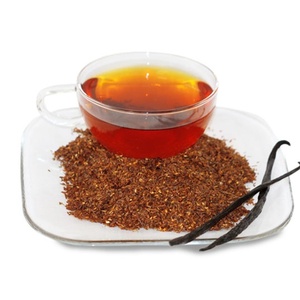
What’s in rooibos?
Rooibos lacks caffeine, making it an option for pregnant women and other folks trying to cut down on stimulants. It contains minerals, phytochemicals, and phytoestrogens while remaining very low (and sometimes completely void) in alkaloids, tannins and calories.
One class of phytochemical found in rooibos includes flavonoids. Flavonoids possess antioxidant, anti-inflammatory and anti-cancer properties.
Rooibos processing
Rooibos leaves and twigs are harvested in the summer and early autumn.
After three to five harvests, the plantation must be reestablished. The material gathered from the plant is chopped into smaller pieces before further processing takes place. Most rooibos is steam pasteurized before being packaged and shipped.
Why is rooibos so important?
In the US, people consume the greatest amount of flavonoids from the traditional tea plant. Now, rooibos is also starting to contribute to this total.
Although many consumers are just now discovering rooibos, it’s actually been commercially available since 1904. During World War II, a shortage of tea from Asian regions increased consumer demand for rooibos.
Starting in the 1990s, consumer demand for rooibos really began to escalate, as a result of a trade alliance between South Africa and other nations. In 1998, 1023 tons of rooibos were produced. In 2007, 14,000 tons of rooibos were produced.
Red rooibos remains the most popular choice, but recently, consumer demand for a “higher antioxidant” beverage has encouraged the commercialization of the first green rooibos products.
The U.S. makes up 5% of the international market. Germany appears to be a bunch of rooibos junkies, as they make up 53% of the market.
Rooibos is not only in demand as a standard “tea beverage,” it’s also being added to cosmetics and body products.
What you should know about rooibos
Rooibos and health
Data on the health effects of rooibos in humans is limited.
It does appear to increase the bioavailability of iron from foods and may act as an antioxidant. Animal research indicates that rooibos may play a protective role against cancer.
In vitro studies confirm the antioxidant effects of rooibos and also show antimutagenic properties.
While no toxicology studies have been completed, there are no documented reports of adverse events. It seems you can’t poison yourself with rooibos.
Traditional medicine has used rooibos to treat:
- Asthma
- Colic
- Eczema
- Headache
- Nausea
- Indigestion
- Depression
- High blood pressure
- Lowered immunity
- Diminished bowel motility
- High blood sugar
- Poor sleep
Drinking rooibos
Rooibos is a naturally sweet beverage, but can also be consumed with added agave, honey or stevia.
Drinkers prepare rooibos differently. For example, the Japanese typically consume rooibos very diluted, while in South Africa, drinkers prefer it more concentrated.
Steeping rooibos is similar to traditional tea:
- Use 1 tsp of leaves for every 1 cup of water.
- Bring the water to a boil, and then let it cool for up to one minute.
- Steep the rooibos leaves between 5 and 8 minutes, slightly longer than regular tea.
- The longer you steep, the stronger the flavour.
There are also blended, flavoured rooibos products available, but read labels carefully.

Summary and recommendations
Drinking rooibos appears to have health promoting properties, but data is limited. It is likely a better option than sugar dense drinks such as soda and juice.
Growing regions are restricted and rooibos must be transported over long distances. Look for fair trade products that ensure humane working conditions for those producing rooibos.
If you use any medications, rooibos may alter their metabolism, so take caution.
Extra credit
Rooibos seems to inhibit an enzyme system in the liver necessary for the metabolism of certain drugs (similar to what naringenin of grapefruit does). So, check with your pharmacist if you use rooibos with any medications.
Rooibos grows better in shady and cool locations.
Rooibos is the only known natural source of aspalathin and one of only a few known sources of nothofagin (other sources include buckwheat and bamboo leaves).
Catechin, commonly occurring in Camellia sinensis teas, has been detected in rooibos.
Anyone up for some Rooibos Espresso?
References
Click here to view the information sources referenced in this article.
Learn more
Want to get in the best shape of your life, and stay that way for good? Check out the following 5-day body transformation courses.
The best part? They're totally free.
To check out the free courses, just click one of the links below.



Share