What is flax?
Flax is one of the oldest cultivated crops. Evidence suggest that people cultivated it in Babylon in approximately 3000 BCE. The seeds have traditionally been used in healing, and the fibres for producing fabric (i.e. linen) and rope.
The flax plant, which grows to about a meter in height, is native to the region spanning the Mediterranean to India, but is now widely distributed all over the world. It can grow up to 1 meter in height.
As a source for fabric, flax has many uses, ranging from tablecloth to warm-weather suits; upscale restaurant owners and tropical playboys alike can celebrate the versatility of linen. However, most people are more familiar with the seeds of the flax plant, which can be ground and consumed, or from which oil can be extracted. The extracted oil, which makes up 40% of flaxseed by weight, is commonly referred to as linseed or flaxseed oil. This oil can be consumed as part of the diet or even used as a preservative finish on wood.
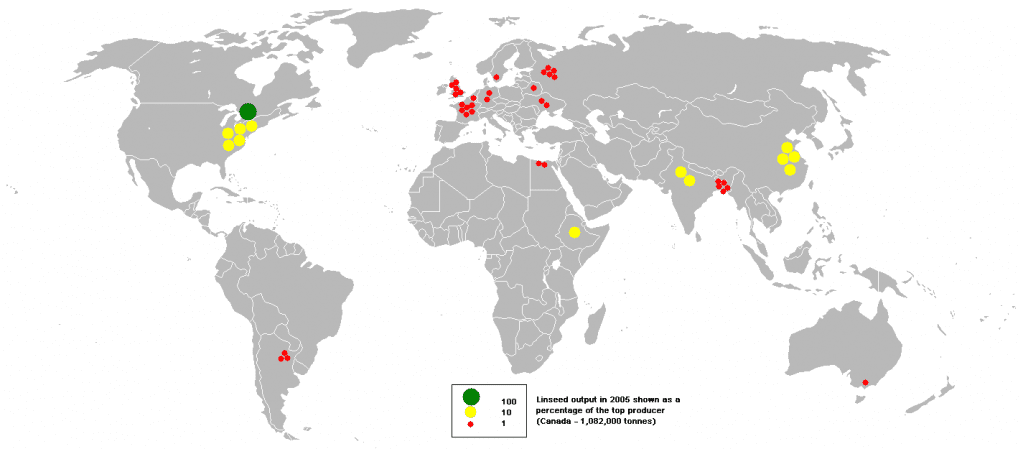
Canada, the U.S. and China are the main producers of flax. The production of flax used to be extensive, but the expansive petroleum industry after World War II resulted in many farms switching from crops like flax to big rotation crops like corn and soy. As a high percentage of corn and soy crops are subject to genetic modification, one can rest assured that in Canada, only non-genetically modified varieties of flaxseed are used in commercial production.
What you should know about flax
Essential fatty acids
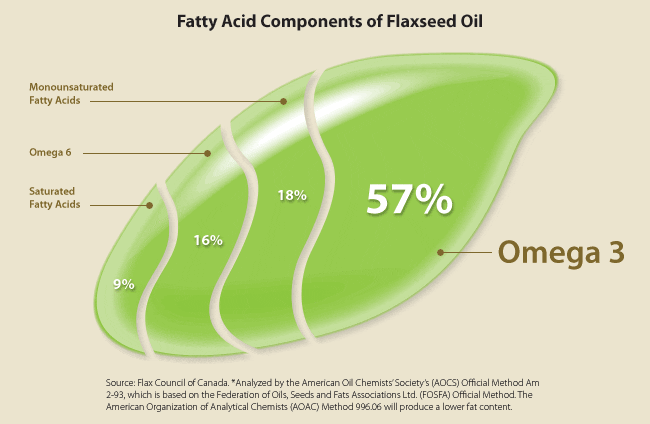
Flax is one of the most popular foods for providing omega-3 fatty acids in the form of alpha-linolenic acid (ALA). ALA is a polyunsaturated fat and can be converted into eicosapentaenoic acid (EPA). After we consume them, these fats are eventually incorporated into the cell membranes of our body; animals whose feed includes flaxseeds show a higher content of omega-3 fats in their meat and eggs.
Humans developed on diets consisting of marine life and/or inland plants. These diets provided plentiful amounts of omega-3 fats, which resulted in an omega-6/omega-3 ratio that was around 1:1. The current North American diet provides a ratio that is around 16:1 (omega-6:omega-3). This is likely due to the shift in dietary staples, which don’t generally include foods like flax, hemp, walnuts, perilla, green leafy veggies, chia, fish and algae.
Nutrients in flax contribute to various processes in the body. The fatty acids may help to increase lubrication of the eye and prevent dry eye syndrome.
Fiber
Flaxseeds also contain insoluble and soluble fiber. One will immediately notice this on the husk of the seed. Furthermore, if the seed is exposed to water, it becomes very sticky, due to the mucilage in the seed coat (another type of fiber). The fiber in flaxseeds can assist with controlling blood sugar levels and regulating hunger. Moreover, fiber is imperative for digestive health. Consuming 2 tbsp of flaxseeds each day can help to alleviate constipation.
Lignans
Lignans are a class of phytoestrogens (aka plant estrogens) that can also act as antioxidants. They may be responsible for some of the health benefits attributed to flax consumption. These lignans are actually the principal source of phytoestrogens in the Western diet, not soy isoflavones. And as with soy foods, there is minimal worry of becoming “estrogenic” from reasonable flax consumption (up to ¼ cup of seeds per day). Extracted oil from flax generally doesn’t contain a significant amount of lignans, but this can depend on the filtering method and whether the manufacturer adds the lignans back in.
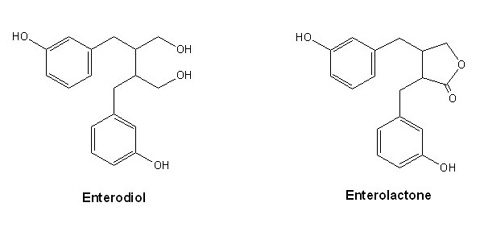
The lignans found in flaxseeds are metabolized into enterodiol and enterolactone by flora in the colon. These have weak estrogenic properties and can influence tissues associated with reproduction, bone, liver, heart and brain function. Lignans are thought to be the reason why consuming flaxseeds cuts the amount of severity of hot flashes significantly for post menopausal women.
Lignans are also hypothesized to reduce high levels of inflammatory markers in the body. Indeed, consumption of lignans from flax can decrease C-reactive protein (CRP), which is a marker of low grade inflammation. Furthermore, flax consumption has also been shown to decrease inflammation of the kidneys in those with kidney disease. Still, other studies have confirmed that other inflammatory markers, along with measures of oxidative stress may be unaffected by the use of flaxseeds and flax oil.
Total lignan content of selected foods
| Food | Serving | Total lignans (mg) |
|---|---|---|
| Flaxseeds | 1 oz | 85.5 |
| Sesame seeds | 1 oz | 11.2 |
| Kale | ½ cup, chopped | 0.8 |
| Broccoli | ½ cup, chopped | 0.6 |
| Apricots | ½ cup, sliced | 0.4 |
| Cabbage | ½ cup, chopped | 0.3 |
| Brussels sprouts | ½ cup, chopped | 0.3 |
| Strawberries | ½ cup | 0.2 |
| Tofu | ¼ block (4 oz) | 0.2 |
| Dark rye bread | 1 slice | 0.1 |
Source: Linus Pauling Institute
You may be a bit confused at this point. On the one hand, flaxseeds provide the anti-inflammatory ALA, but some of the research tells us that flaxseeds don’t improve all markers of inflammation. Why? This may be due to the conversion rate of ALA to EPA and ultimately, docosahexaenoic acid (DHA).
Flax and EPA
The standard North American diet provides 80-110 grams of fat each day. Even with that amount of fat consumed each day, we’re still omega-3 deficient. 90% of the omega-3 fat most of us consume on a regular basis is plant-based ALA. ALA must be converted into EPA and DHA, which are the fatty acids that may help to prevent things like heart disease, cancer and diabetes.
For the conversion of ALA into EPA, we need delta-6-desaturase. Good old delta-6 is inhibited by high blood sugar levels, high saturated fat consumption, and alcohol intake. So if your diet is poor, flax won’t do you much good, because you won’t be able to effectively convert ALA into the really healthy omega-3 fats.
Indeed, some studies have found that the conversion rate of ALA into EPA (and DHA) has been low. Data show that fish oil produces a rapid increase in DHA and total omega-3 fatty acids; still, flax oil capsules (2.4 or 3.6 grams/day) are sufficient to increase total ALA, EPA and DHA. Other data has shown that 2 grams/day of flax oil only increases blood levels of ALA, not EPA and DHA.
Flax and cancer
While diets rich in ALA may protect against breast cancer, data on how ALA might influence the risk of prostate cancer are mixed. Studies in animals indicate that ALA impedes cancer development and can decrease tumors. You might remember that enterodiol and enterolactone compete with estrogen for estrogen receptor sites in breast tissue, which may decrease the risk of breast cancer. This may also be the case for prostate tissue. Still, the data is not yet conclusive. Researchers know that eating more lignan rich foods is associated with lower rates of colon cancer, but this may simply be due to the associated high fibre consumption. In the case of cancer and ALA from flax, there’s still a lot we don’t know.
Flax and heart health
Consuming 2 grams of flax oil each day for 12 weeks might not be enough to improve heart health, but consuming 2-3 tbsp of ground flaxseeds each day for about 10 weeks can be extremely health promoting. Researchers have measured significantly lower levels of total cholesterol, bad cholesterol, insulin resistance and blood triglycerides with this level of intake, results similar to those seen from powerful statin drugs (which carry with them various side effects). Unfortunately, flaxseeds seem to also decrease levels of good cholesterol.
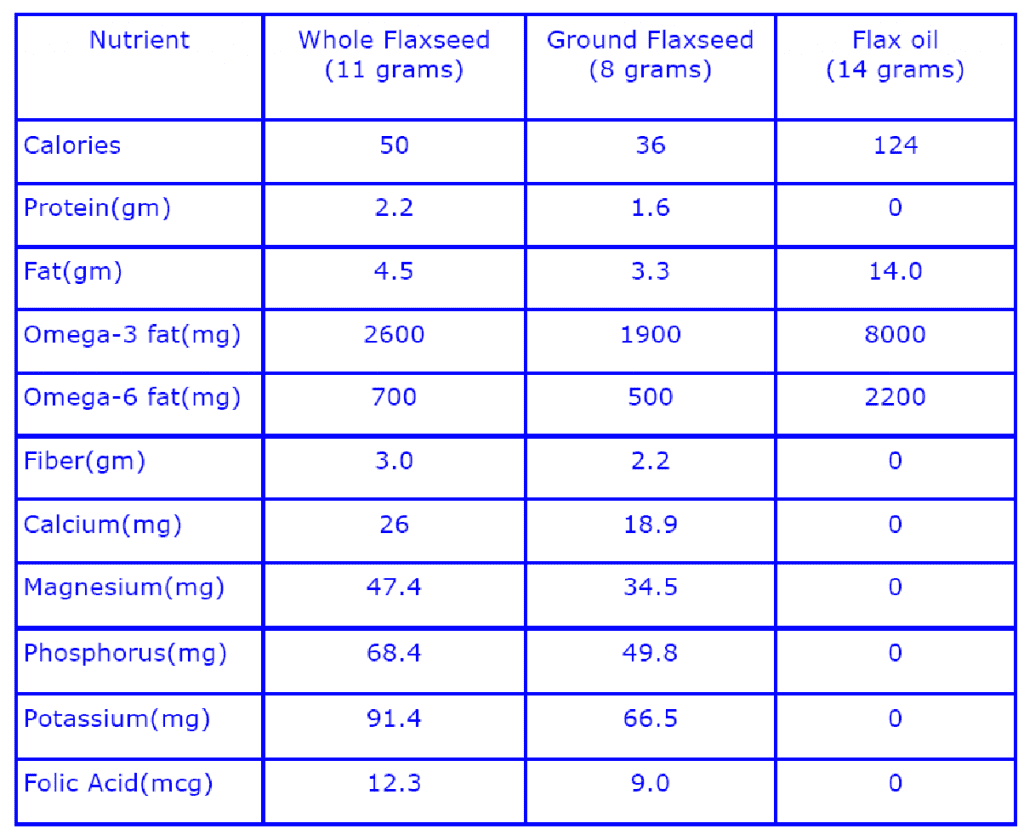
Nutrient differences between flax food product type
Extra credit
Raw flaxseeds, along with other nuts/seeds (about 12,000 of them) contain cyanogenic glucosides. Consuming too many of these compounds over time can cause an accumulation in the body and toxic (even life threatening) reactions. Cooking the seeds will render the glucosides harmless.
Luckily flaxseeds can be used in baking, and can even be used as an egg substitute. 1 tbsp of ground flaxseed mixed with 3 tbsp of water, then mixed in a food processor = 1 egg.
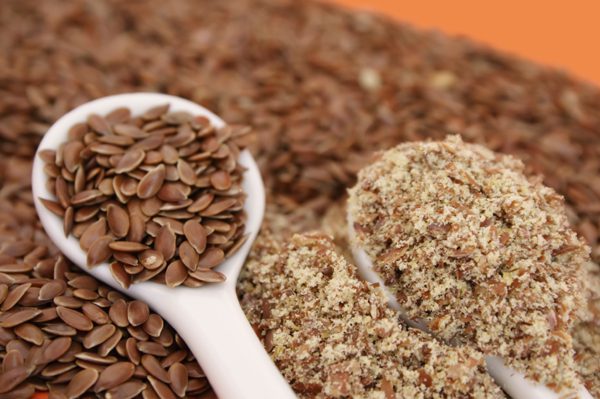
Un-ground, whole flax seed can not be absorbed by the body. It needs to be ground first. You can buy pre-ground flax, or grind the seeds in a coffee grinder.
Golden flax is milder than regular flax, and usually has a slightly higher fat content.
If only the oil is extracted from the flaxseed, the remaining material can be fed to livestock.
Store flax in the fridge if you’re going to use it within the month. Store it in the freezer if keeping it long-term.
Farming literature from the Northern U.S. indicates that people trying to stand on flax in a bin have sometimes sunk in swiftly because the flaxseeds are so slick. Some individuals have even sunk in over their head in flax bins and suffocated.
Summary and recommendations
- Adding 2-3 tbsp of ground flaxseeds to your food intake each day can help to balance out fatty acid intake, improve motility and may have other health benefits related to cancer and cardiovascular health.
- If you’re already supplementing with an omega-3 fatty acid supplement, don’t feel pressured to add flax into your diet.
- Flax oil can be used to boost omega-3 fat intake but it lacks the fibre and protein of whole seeds — plus, it’s not a whole food. We suggest using whole food sources of omega-3s when possible.
Here are some suggestions for adding more flax in your diet:
- Combine ground flax with cinnamon and use as a dip for fruit (like apples)
- Sprinkle ground flax over berries
- Mix ground flax in Super Shakes
- Add ground flax to whole grain cereals
- Add ground flax to salads
- Add ground flax to salad dressing
- Sprinkle on cooked vegetables
- Add ground flax to hummus
- Add ground flax to nut butters
- Combine flax and cinnamon with canned pumpkin
- Add to Gourmet Nutrition recipes like pancakes, bars, cookies, muffins
Further resources
References
Click here to view the information sources referenced in this article.
Learn more
Want to get in the best shape of your life, and stay that way for good? Check out the following 5-day body transformation courses.
The best part? They're totally free.
To check out the free courses, just click one of the links below.



Share