I’ve finally found a fitness-focused New Year’s resolution that’s worth making. And here it is, along with 10 client-proven ways to reach your own health and fitness goals this year.
- Want to listen instead of read? Download the audio recording here…
++++
If you’re reading this, it means you survived the holidays.
It’s the most wonderful (crazy, stressful, awesome, magical) time of the year.
You know the drill: Kids and toys everywhere. In-law invasions. And get this: My 6-year-old daughter and I found reindeer tracks in the backyard on Christmas morning again this year, ha!
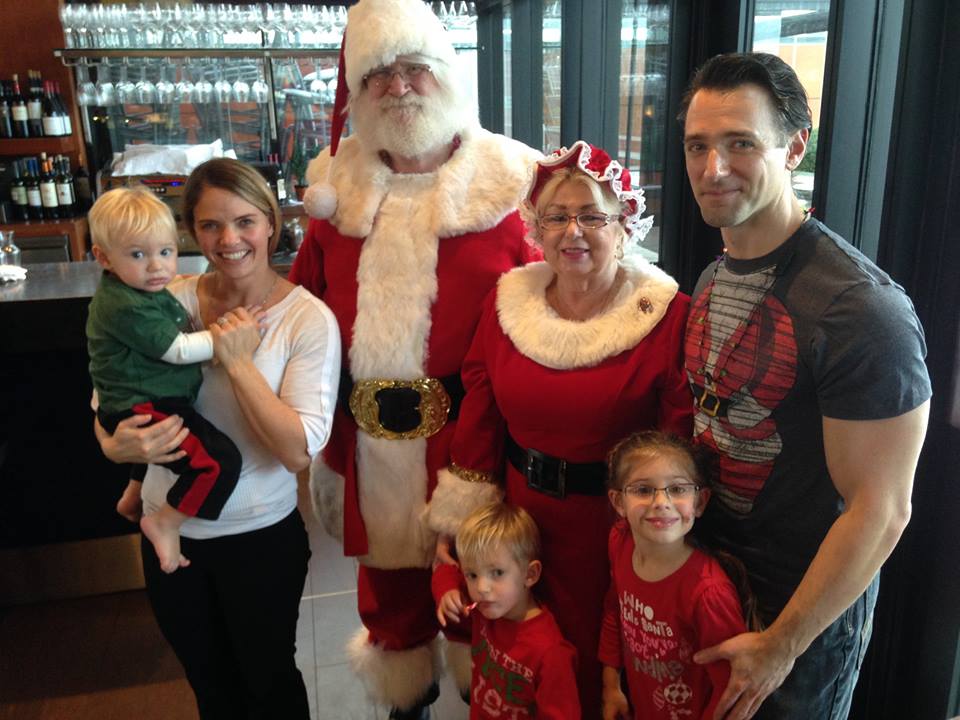
Amid all the craziness — in fact, because of the craziness — my wife and I decided to break tradition and actually make New Year’s Resolutions this year.
Ordinarily it’s not something we would do.
In fact, it’s not something we would ordinarily suggest you do either. Especially if your resolutions typically involve detoxes or juice cleanses, or chasing an unrealistic level of leanness.
Stats on New Year’s Resolutions — especially fitness ones — are abysmal. Packed gyms on January 2 are ghost towns on March 2.
I thought about this the other day while driving home from a family function (and while trying to keep Kid #1 from punching Kid #2).
At Precision Nutrition, we often use the phrase:
“Fitness in the context of a real human life…”
What does “real life” actually mean?
It means something like this:
- All 4 kids are sick (at the same time), so you’re getting virtually no sleep…
- Your mother-in-law is going through cancer treatment and you visit daily…
- It’s Christmas/Thanksgiving/Passover/Diwali/Eid or the long weekend…
- Because of the holiday, you’ve got a tight deadline at work…
- When you’re stressed your lower back acts up…
- And just as you’re about to head out for the blessed 30-minute workout you’ve been looking forward to all day, your dog drops a diarrhea poop on the living room carpet.
That, my friends, is fitness in the context of a real human life.
So, is it any wonder most fitness resolutions fail?
If you think about it, most health and fitness plans live outside the context of a real life:
“Here’s a 30-day detox diet to follow… and a new hardcore workout DVD…”
“Why not do a fitness competition in April… and a triathlon in August…”
“It’s time to go all-in… it’s the only way to win!”
Except that it’s not. Because all-or-nothing thinking rarely gets you all. It usually gets you nothing.
That diet plan, or workout DVD, or one-size-fits-all training program you pulled from Triathlon magazine was never built to accommodate sick kids or cancer treatment or your co-worker’s two-week vacation.
Yet when the insane idea that you have to do all things perfectly takes hold, it’s pretty hard to shake loose.
Sure, we can play make-believe. We can imagine a life where everything is peaceful, calm, and totally in our control all the time. But that’s a surefire recipe for failure.
Real human lives are messy and complicated. Real human lives are unpredictable.
When we learn to accept this, they can also be dynamic and exciting. They can push us to grow.
Save $300 on the industry's top nutrition certification
Our biggest price drop of the year. Learn to help anyone eat better and get lasting results, whether you're starting a coaching career or leveling up the one you have. Ends Friday.

Therefore, this year’s resolution.
With 4 children, aging parents, active social lives, and thriving businesses — my wife and I really did make New Year’s Resolutions this year.
As we always do, we plan on continuing to prioritize our health, build strength and fitness, and maybe even maintain our abs.
But this year we’ll do it flexibly and honestly in the context of our real human lives.
Our children will be fevered, snotty, and barfy. Our time will be limited. And we’ll miss last call at the gym because of doggie poo.
Yet this year we’ll plan for all that in advance.
After we’ve cleaned up the poo, we might work out in that same living room. With no weights or machines, maybe we’ll jump around like maniacs so we can move our bodies while keeping an eye on the kids.
Or maybe we’ll be stuck eating nasty hospital food. If so, we’ll make the best choice we can within the spectrum of choices. And then do push-ups and air squats in the cafeteria, or walk laps around the cancer center.
And on those rare days we’re not dealing with emergencies?
Maybe we’ll soothe our control-freak souls with a luxurious, 2-hour, relaxed, well-rounded workout. Or a weekend of cooking healthy food to prep meals before a busy week. (Even though neither is actually required.)
It’s not easy. But at least we have a plan.
You know, all this got me thinking…
How are our clients doing it?
I run a nutrition and fitness coaching company, so when it comes to figuring out health and fitness in the context of real life, I’m sitting on a virtual pot of gold.
Clients go through our coaching program for a year, and with the help of our expert coaches, sort out just that: How to make their health and fitness goals a reality, even as the chaos of life continues.
So I decided to ask them which new strategies they’ve developed to make it all work — nutrition + snotty kids + work deadlines… all of it.
They responded with dozens of great tips for real-life healthy living. Here are some of the most common (and awesome) ones we heard.
1. Check in with yourself every morning.
“I start my day with reading my Precision Nutrition Coaching lesson. It’s essentially plugging into myself first thing every morning. By doing the program work when I wake up, I remind myself that when I am healthy and happy, I have more to give to the world.”
2. Eat protein at breakfast.
“I include protein at every breakfast. My favorite: breakfast meatballs. Turkey + shredded veggies (zucchini, carrot, celery and onion), quick oats, egg whites and spices made into balls and cooked in muffin trays in advance. Then I heat ‘em up in the morning.”
3. Bring a lunch you’re excited to eat.
“I bring a lunch that is a simple salad with (quality) lunch meat for protein. Adding little extras like seeds and nuts to my salad along with avocado makes it something I look forward to eating, instead of leftovers that I would rather leave behind when others are going out.”
4. Pre-prep dinners.
“PREP! This has been huge for me. I come home late and I’m often rushed to get food in me. Now I just take everything I’ve already cut up or cooked (in advance) and put it in a pan. It’s a much less ‘rush-y’ situation, which carries over into eating… so I’m eating slowly and not inhaling food right past my full point.
5. Eat at the table.
“In the past, I ate dinner in a rush, then ran off to the next activity (soccer, coaching, etc.). I have been making a conscious effort to sit down and slowly eat the meal, so I can actually remember tasting and enjoying it.”
6. Exercise whenever, wherever, and however possible.
“I never choose the closest parking spot. This way I can get in a little more walking. Also during the school day (I’m a teacher), I walk as much as possible around my classroom as students are working, and around the building.”
7. Aim for “a little better” instead of “perfect”.
“It’s not about being perfect. It’s about gradual and continuous improvement. I used to get really down on myself if I ate unhealthy or missed some workouts and felt like I had failed. Now I feel that I’ve put in some great work, and I can do even better tomorrow and next week.”
8. Get all sorts of support.
“I use a meal service for healthy meals, which are pre-portioned. I commute an hour each way to/from work and I work long hours as an attorney, so having the ingredients there with recipes has helped immensely.”
9. Find accountability.
“My coach consistently reaches out to me, and the PN lessons remind me to move daily and claim the day for myself. Doing those things before I head out to work keep me focused. It reminds me this is my life and my choices can be life-affirming in every moment.”
10. Show up again the next morning.
“Show up each day and do what you can on that day. Don’t jump ahead. This is not a race. It’s not a diet. It’s your life.”
What could your “real life resolution” look like?
My wife and I have no clue what life will bring us this coming year.
But we’re committed to doing the best we can, when we can, with whatever we’ve got. Day in and day out.
I hope you are too.
With the New Year around the corner, it’s an interesting time to make (or renew) your commitment to health and fitness.
Why not do that while considering the context of your own unique, interesting, and (no doubt) challenging life?
What to do next
1. Consider your health and fitness goals for this coming year.
What does a renewed commitment to health and fitness look for YOU — in the context of YOUR own unique, interesting and challenging life?
How could you aim to make things “a little bit better” this year, instead of “perfect or nothing”?
2. Celebrate your accomplishments from the past year.
Even if there’s lots you want to change, think back and call out at least two or three things you did well this past year.
Give yourself a pat on the back for any and all signs of progress, no matter how small.
3. Plan for things to go wrong.
What challenges do you anticipate might interfere with the progress you want to make?
Think about those roadblocks now. Consider some adjustments and workarounds in advance.
Accepting the messy “real-life” stuff will be key to your success.
4. Start small.
What is one little thing you could do today to help you prepare for success this year?
Maybe it’s researching a healthy meal delivery service for busy weeks, downloading a relaxing meditation podcast, or booking a babysitter one evening a week.
Take one small action now, and you’ll already be on your way.
5. Take inspiration from PN clients.
Do any of the strategies above intrigue you? Pick one and give it a shot.
If you usually eat dinner on the go, try sitting down for a meal at the table. If you want accountability, find someone to check in with.
Remember, you don’t have to get it “perfect”. Not now, not ever.
All you have to do is make an effort, and keep showing up every day.
If you’re a coach, or you want to be…
You can help people build sustainable nutrition and lifestyle habits that will significantly improve their physical and mental health—while you make a great living doing what you love. We'll show you how.
If you’d like to learn more, consider the PN Level 1 Nutrition Coaching Certification. (You can enroll now at a big discount.)

Share