Most people have an idea about how to “warm up.”
- Touch toes.
- Swing arms.
- Bounce pecs.
- Put on sweatband.
But is this the optimal way? And what is a warm-up really supposed to accomplish?
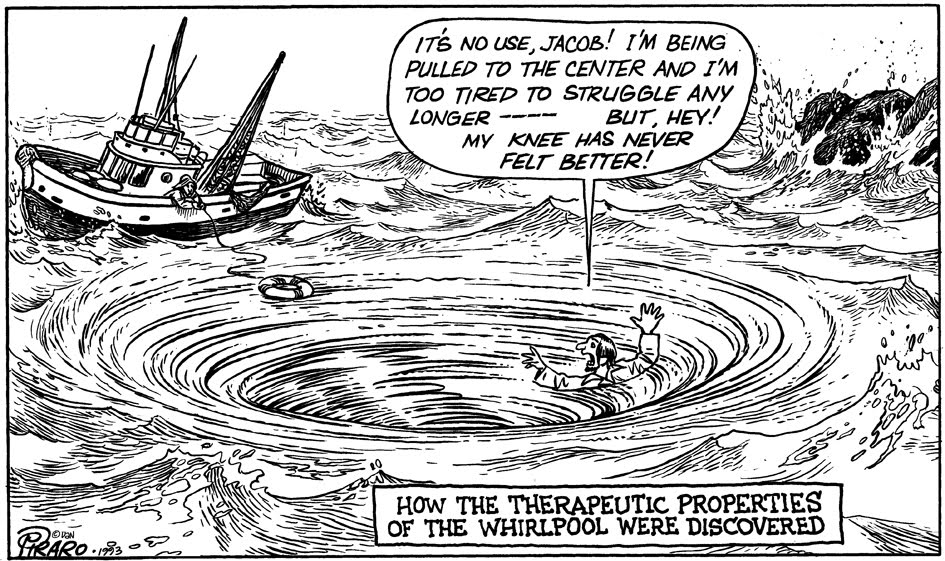
Homer shows us how not to warm up
What is warming up?
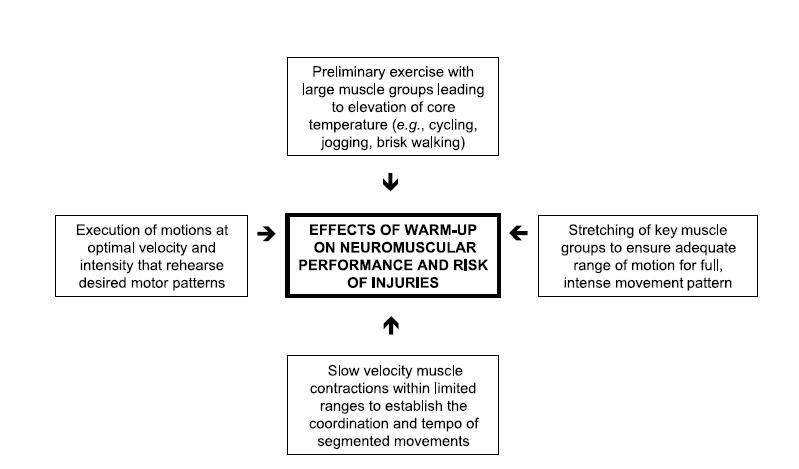
Warming up prepares the body for more intense movement and activity. It literally “warms up” the body by increasing core temperature.
A proper warm-up consists of movements that:
- Move joints through their ranges of motion (ROM) — and enhance this ROM
- Enhance mobility
- Release connective tissue bonds
- Distribute fluid in the joint space
- Boost speed/force of muscle contractions
- Amplify nerve impulse transmission
- Promote oxygen uptake
- Keep you out of the whirlpool
Movement types
Movements used during a warm-up might include:
- Movements intended to get the core temperature up and the whole body moving, e.g. brisk walking or light jogging while swinging the arms
- Static movements (moving into a position and briefly holding it) — the classic “stretch and hold”, e.g. touching your toes for 30 seconds.
- Dynamic movements such as:
- stretching while moving (e.g. walking lunges for hip flexibility, or tipping your head side to side for neck mobility)
- moving against light resistance (e.g. a few single-legged Romanian deadlifts with light or no weight, or jumping)
Why warming up is important
What do athletes, exercisers and old folks complain about? Well, lots of things. But I’m constantly hearing about stiffness, injuries and poor flexibility.
While age-related connective tissue changes and water loss can contribute to inflexibility, most of it comes down to “use it or lose it.” A proper warm-up helps to counteract negative effects of aging while enhancing performance.
Not warming up can lead to poor mobility/flexibility, injuries and stiffness. These are the people at the senior center, on a basketball court or at the family reunion who can’t move, pick up kids, play sports, exercise to their full capacity, or clean up spilled hemp seeds. In all cases, life sucks for them.
Flexibility, mobility, and injury
Some consider the warm-up a time to build flexibility and mobility. Flexibility is the capacity of a joint to move freely through a full range of motion. Mobility is our ability to produce a desired movement. Both are based on the elasticity of muscle, ligaments, and connective tissues, but while poor mobility is correlated with injury, poor flexibility is not necessarily.
We want some areas to be more mobile but other areas to be more stable and strong. For most folks, this means it’s important to mobilize:
- front of shoulders
- ankles
- front of hips and IT band
- hamstrings
- thoracic spine
Tightness in these areas can contribute to tears and impingements.
For instance, nearly 70% of the population will suffer from a shoulder disorder at some point in their lifetime — largely due to the inherent instability of the joint combined with our modern “desk monkey” posture that pulls the shoulders forward and hunches the upper back.
While minimal flexibility is related to injury, performing static stretching (exclusively) during a warm-up doesn’t seem to decrease injuries. And too much stretching and flexibility may even increase the rate of injury. Many people, in fact, suffer from injuries caused by excessive movement and flexibility in the:
- shoulder joint
- knees (especially women)
- cervical and lumbar spines
Motor learning
Beyond the physiological benefits of warming up, engaging in movements you’re about to execute during exercise/sport allows for visualization of positive motor outcomes. In plain language, that means you practice the movement pattern so that your body knows what it’s about to do.
Muscle soreness
Despite the many benefits of warming up, it will not prevent muscle soreness — no matter what type of warmup you choose.
What you should know
Static exercises
Warming up with static movements has pluses and minuses.
Static stretching can improve flexibility at a given range of motion. It can also improve balance — a bonus for yogis and gymnasts.
However, static stretching can create a temporary strength deficit, diminish jump performance and decrease running economy for up to 1 hour, since the sensitivity of tension receptors in muscle is decreased. On the other hand, physiotherapists and strength coaches can actually use this strength inhibition to their advantage, by stretching areas that commonly tighten up and contribute too much to a movement (for example, stretching the front of the hips before running to weaken the involvement of the hip flexors, which tend to be over-strong and tight).
Dynamic exercises
A dynamic warm-up can improve nervous system activation, power, and range of motion at the joint. Dynamic exercises performed before exercise/sport that requires high muscular forces can increase blood flow, metabolic activity, temperature, oxygen uptake, muscle compliance, nerve impulses, decrease resistance of connective tissues and reduce muscle tension. This type of warm-up creates minimal (to no) muscle damage, so it’s fine to do on a regular basis.
When you have mobile soft tissue and a rapid response nervous system, you’ll be able to move better and perform exercises that challenge your body. This means more productive workouts and a healthier physique.
Adding static exercises to a dynamic warm-up may diminish the force increases from a purely dynamic protocol.
Dynamic exercise examples
Dynamic exercises should not result in any sharp pains, but should feel challenging and strangely pleasant, especially after you get done. Find the edges of your range of motion, and work to gently expand these edges. If mild discomfort felt during the exercise continues afterwards, find an easier/modified version.
Foam rolling can be included as part of a warm-up since it helps with mobility and breaks down scar tissue/adhesions. This relaxes the fascia and makes muscle more pliable.
Foam rolling exercise examples
Summary and recommendations
Consider your warm-up period an essential part of the workout – not optional free time. It’ll make you stronger and improve your body control, balance, movement mechanics, and agility.
Static exercises are:
- Useful for improving range of motion
- Not ideal for a warm-up because they don’t appear to prevent injury and may limit force production
- Best performed after a workout, as a “warm-down”
Most benefits of a warm-up come from actually warming up the body, which can be accomplished by 4 to 15 minutes of dynamic movements
Seems to enhance performance and power output when compared to static exercises
Find a warm-up that makes your body feel the best, and one that you can stick with. The variation in responses to warming up emphasizes the unique nature of individual reactions to different protocols. Targeting ankles, hips, back and shoulders will likely result in the most benefit. See example warm-up protocols below.
Extra credit
IT band pain
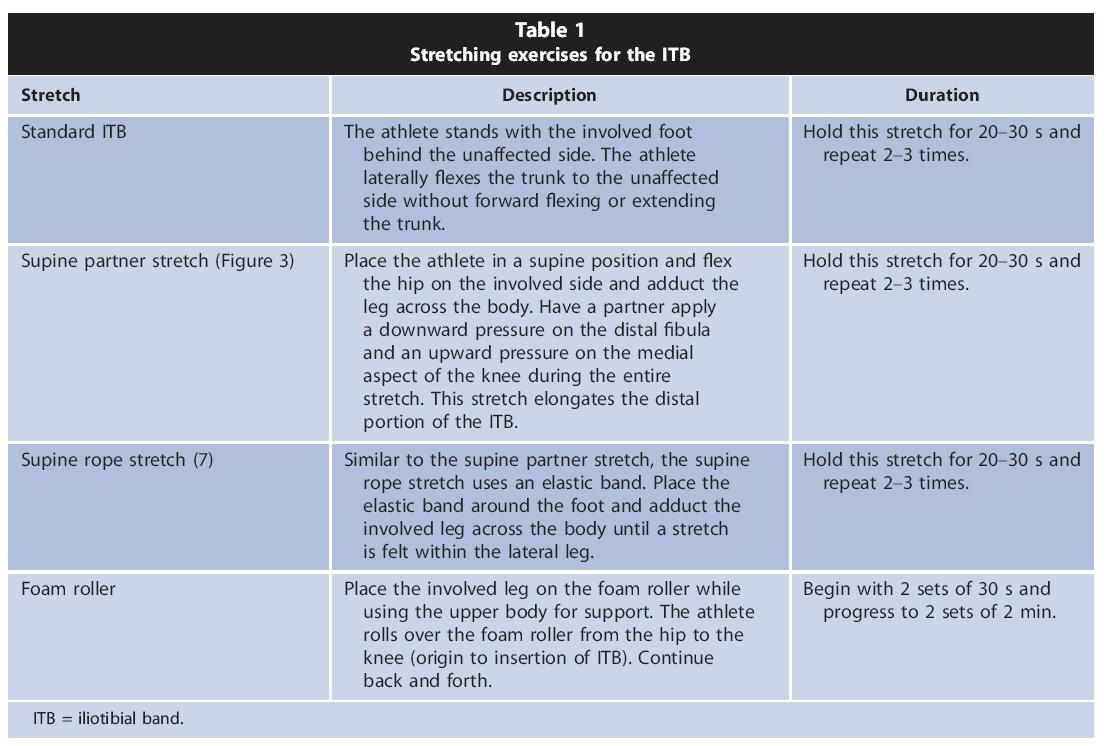
Iliotibial band (ITB) pain is one of the most common complaints among exercisers/athletes. If your ITB hurts, you probably have poor adductor and ITB flexibility along with weak abductors and glutes.
To remedy this, start including stretching exercises for the ITB (like in the following table):
Then, you must strengthen the hips. This includes:
- Hip hikes
- Clams
- Step downs
- Lateral band walks
- Straight leg & 45 degree exercises (with or without bands) that focus on the gluteus medius (straight leg abduction, bridge, monster walks, etc.)
Eat, move, and live… better.©
The health and fitness world can sometimes be a confusing place. But it doesn't have to be.
Let us help you make sense of it all with this free special report.
In it you'll learn the best eating, exercise, and lifestyle strategies — unique and personal — for you.
Click here to download the special report, for free.
.References
Click here to view the information sources referenced in this article.



Share